

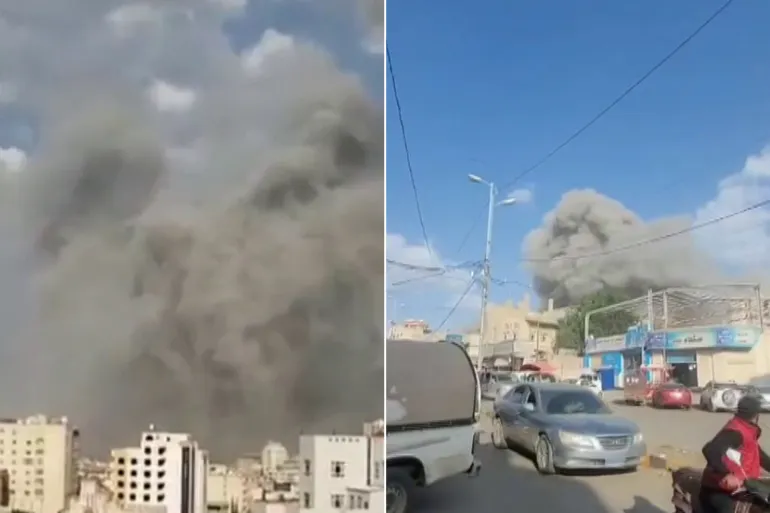
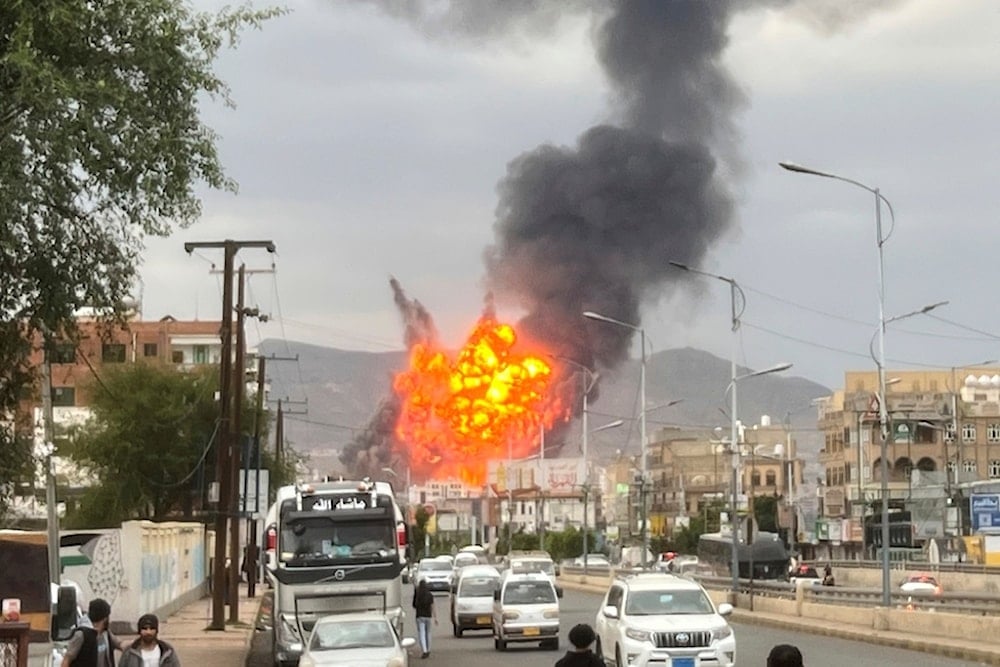
Israeli forces carried out an aggression against the Yemeni capital, Sanaa, with strikes concentrated on the city’s southern sector.
According to the Yemeni Civil Defense, the attack targeted civilian facilities and infrastructure, with rescue teams immediately dispatched to the scene of the strikes.
Yemeni defenses confront Israeli warplanes
A Yemeni military source said that air defenses confronted several Israeli formations participating in the assault, forcing a number of aircraft to withdraw before they could launch strikes. The source noted that dozens of Israeli fighter jets had been deployed in a large-scale operation, but Yemeni forces set up multiple ambushes, successfully repelling much of the attack.
The source confirmed that while most of the aerial aggression was foiled, Israeli forces resorted to using naval assets to strike the capital.
The source added that the Israeli military sought to mount an extensive campaign using dozens of aircraft, yet the preparedness of Yemeni defenses disrupted the assault. “Our defenses succeeded in confronting the Israeli aggression and thwarting most of its objectives,” the source said.
31 journalists killed
Israeli airstrikes on a newspaper complex in Yemen last week killed 31 journalists and media workers, a report released Friday by the Committee to Protect Journalists (CPJ) revealed.
The attack represents the deadliest single strike on journalists since the Maguindanao massacre in the Philippines 16 years ago and the second-deadliest incident ever recorded by the New York-based press freedom group.
The strikes hit a government press complex at 4:45 pm local time on September 10, as staff of a Yemeni newspaper were finalizing a weekly edition, editor-in-chief Nasser al-Khadri told CPJ.
The timing contributed to the high death toll, which included journalists and media workers at three Yemeni outlets in the capital, Sanaa. A child who had accompanied one journalist to work was also killed in the strike, al-Khadri said.
‘Its loss is deeply painful’
Israeli strikes on Yemen in recent weeks have caused widespread destruction in Sanaa, killing dozens and damaging residential areas. The Yemeni Armed Forces have launched missile and drone attacks on “Israel” in support of Palestinians in Gaza amid the ongoing Israeli campaign.
Al-Khadri told CPJ that his newspaper’s printing press and century-old archives were destroyed in the attack. “Its loss is deeply painful,” he said. Human rights advocates emphasized that targeting news outlets is not justified under international law, even if those outlets publish political messaging.
“Propaganda is not enough to make a media institution a military target,” said Niku Jafarnia, Yemen and Bahrain researcher at Human Rights Watch. “They must be actively contributing to military action, for example engaging in military communications.” Under international law, journalists are considered civilians unless directly involved in hostilities.
The CPJ report placed the Yemen attack within a broader pattern of Israeli strikes against journalists across Gaza, Lebanon, Iran, and Yemen since October 7, 2023. According to CPJ, at least 233 media workers have been killed. The Sanaa strike mirrored a June attack on Iran’s state broadcaster in Tehran, after Israeli Security Minister Israel Katz alleged that “the mouthpiece of Iranian propaganda” would “disappear.”

