

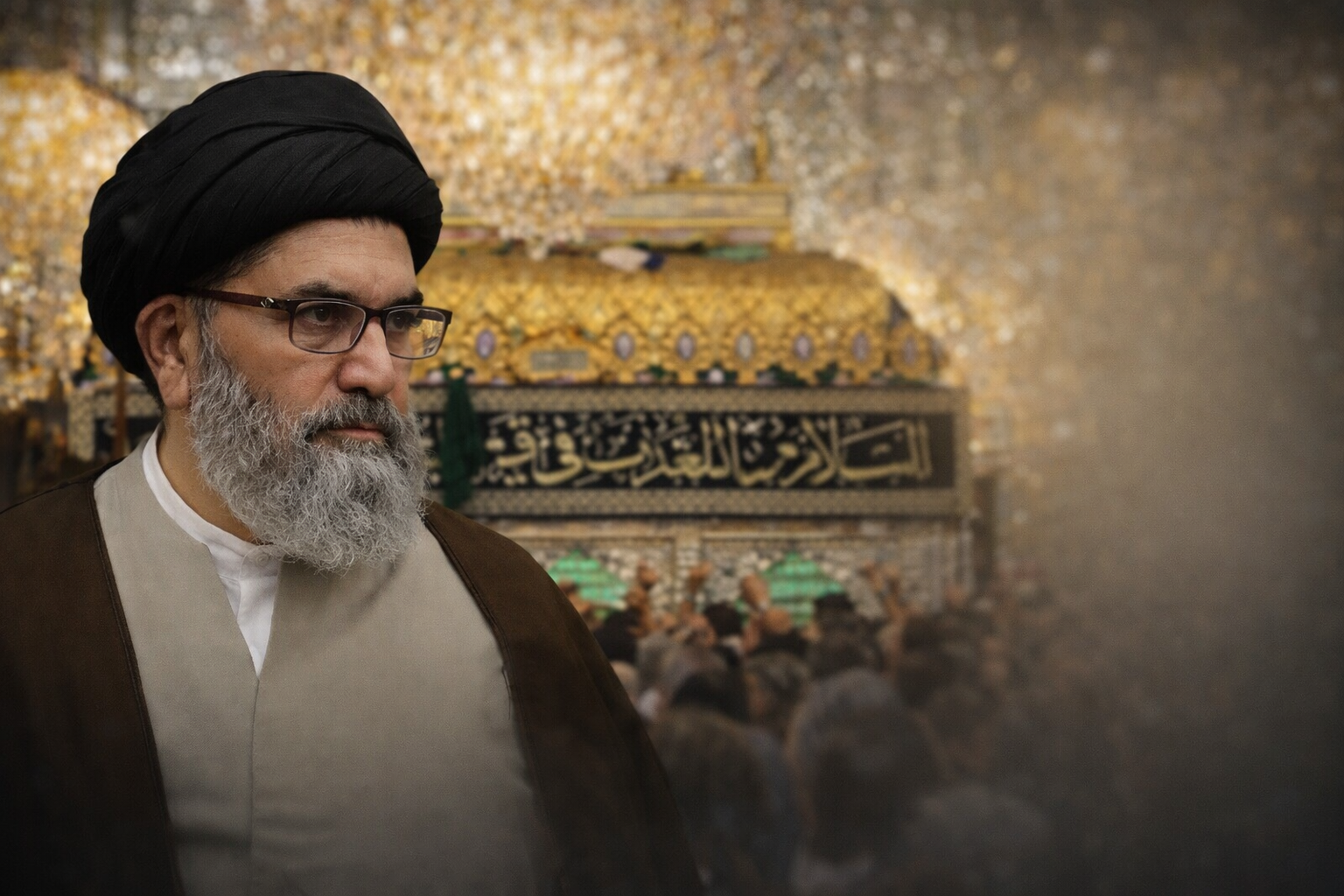
Following the Seerah of the Imams (peace be upon them) Is the Path to the Salvation of the Ummah
Rawalpindi / Islamabad – January 14, 2026:
The Leader of the Jafaria Community of Pakistan, Allama Syed Sajid Ali Naqvi, in his message on the martyrdom anniversary of the seventh Imam, Imam Musa al-Kazim (peace be upon him), on the 25th of Rajab al-Murajjab, stated that the thirty-five-year period of his Imamate represents a brilliant chapter in history, marked by his continuous guidance in every sphere of life.
He said that Imam Musa al-Kazim (peace be upon him), following the conduct and character of his noble grandfather, the Holy Prophet (peace be upon him and his family), realized that the deviant powers of his time were actively engaged in distorting Islamic beliefs and doctrines. Consequently, he did not hesitate for a moment to raise the voice of truth against deviation. As a result, he endured many years of imprisonment and hardship, and ultimately attained martyrdom while bearing these severe trials.
He further explained that the Imamate of Imam Musa ibn Ja‘far (peace be upon him) began during an extremely difficult era. After the martyrdom of his father, Imam Ja‘far al-Sadiq (peace be upon him), he assumed the position of Imamate at a time when the Abbasids had overcome their early internal conflicts and wars and, after brutally suppressing their opponents, had begun silencing all dissent. Even during the harsh and challenging phases of exile and imprisonment, the Imam confronted hardships with steadfastness, determination, courage, and bravery. At times he faced exile, at times imprisonment, and at times was forced into concealment.
According to historical accounts, Imam Musa al-Kazim (peace be upon him) remained absent from Madinah for a long period and lived in concealment in the villages and rural areas of Syria. Moreover, historians recording Islamic history should pay special attention to the significant and prolonged aspect of his imprisonment, which was the result of a long and patient struggle.
Emphasizing the need to follow the character and conduct of the Infallible Imams (peace be upon them), the Leader of the Jafaria Community stated that history bears witness to the fact that even after the martyrdom by poisoning of such an exalted personality—who endured imprisonment and suffering for the promotion of truth and justice—the forces of evil and oppression remained fearful. This is why the tyrannical rulers were afraid of his funeral and his sacred grave. When his body was taken out of prison, the state machinery announced that it was the funeral of one who had rebelled against the government, in an attempt to tarnish his image and character in the eyes of the people, but they failed. Today, his sacred shrine in Baghdad, in al-Kazimiyyah (Kazimayn), remains a center of devotion and a place of refuge for people from all walks of life.

