

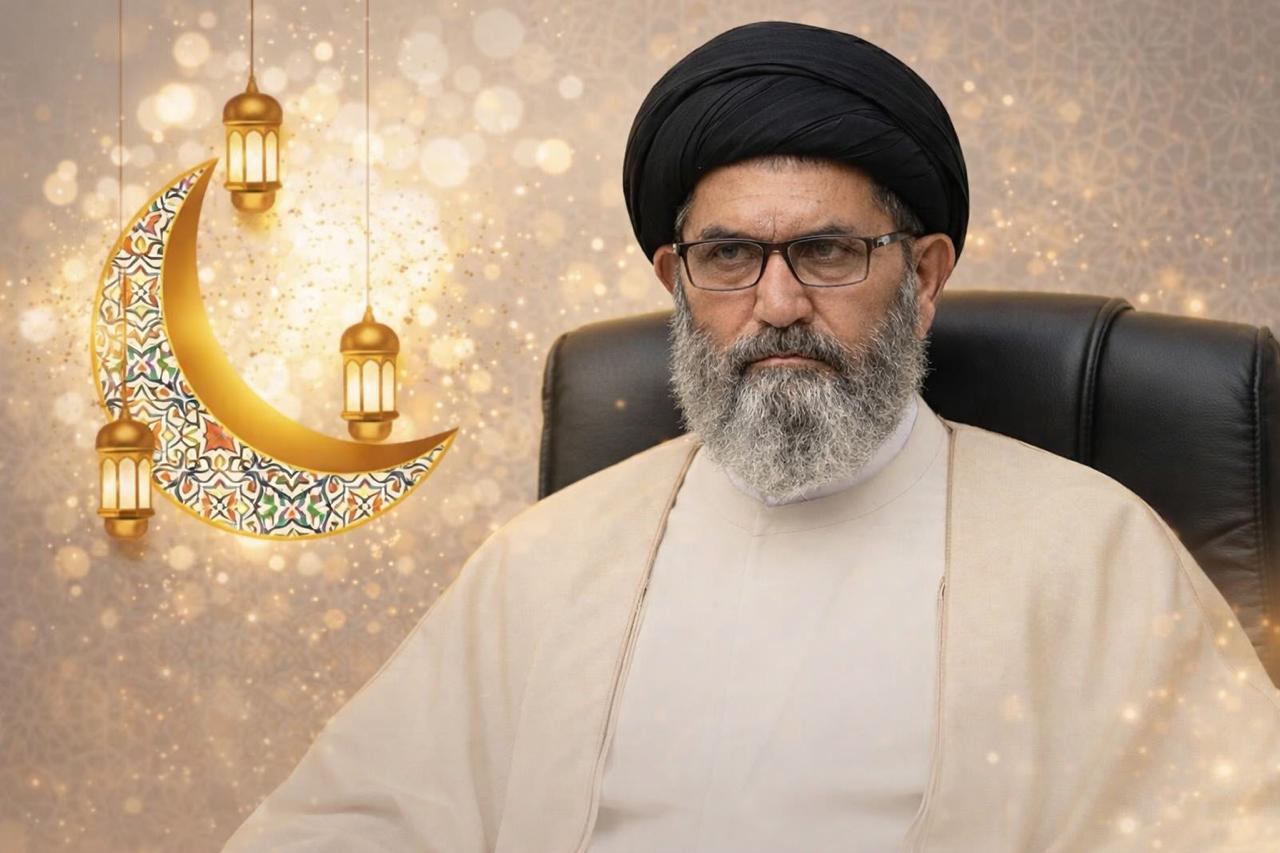
The Leader of Shia Muslims in Pakistan, Syed Sajid Ali Naqvi, in his message on the advent of Ramadan 1447 AH, stated that the ninth month of the lunar year—during which believers abstain from certain acts from dawn to sunset with the intention of seeking closeness to God, and perform the fundamental act of fasting—is not obligatory in Islam alone; rather, all religions acknowledge its benefits and observe fasting in one form or another.
He noted that the Holy Qur’an clearly declares the obligation and legal rulings of fasting:
“O you who believe, fasting has been prescribed for you as it was prescribed for those before you, so that you may attain piety.”
And:
“[Fasting is for] a limited number of days. So whoever among you is ill or on a journey – then an equal number of other days… And that you fast is better for you, if you only knew.”
He further stated that the Qur’an describes the virtue of this blessed month:
“The month of Ramadan is that in which the Qur’an was revealed as guidance for mankind.”
He quoted the Holy Prophet (PBUH) as saying:
“Ramadan is named so because it burns away sins.”
Likewise, Sayeda Fatimah al-Zahra (peace be upon her) said:
“Allah has made fasting obligatory to strengthen sincerity.”
He emphasized that in the present challenging circumstances faced by the Muslim Ummah, the path to reform lies in continuous righteous action and self-purification during this blessed month.
He stated that upon the arrival of Ramadan, it is the government’s responsibility to ensure the immediate and affordable provision of essential commodities, to control lawlessness and terrorism, to provide safety and security, to uphold the sanctity of the holy month, and to manage electricity load-shedding especially during Suhoor and Iftar times.
On the other hand, the Muslim Ummah must strive to benefit fully from the blessings of Ramadan and sincerely engage in worship and spiritual discipline for self-purification, as the elimination of injustice, oppression, and instability depends on sustained moral and spiritual reform.
He concluded by stressing that Muslims should make recitation of the Holy Qur’an a regular practice during Ramadan, reflect deeply upon its meanings, explore its wisdom, and implement its teachings in their personal and collective lives so that humanity may walk the path of guidance and attain ultimate success in the Hereafter.

